
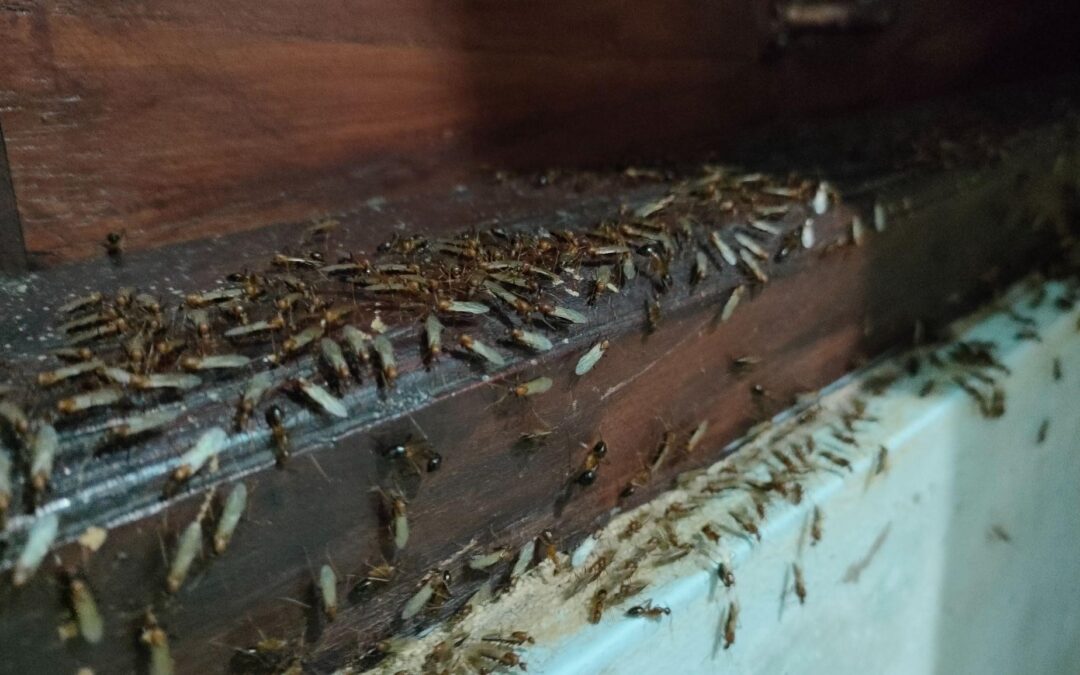
Termite swarm season is the period when reproductive termites (swarmers) leave established colonies to form new ones, often near homes with moisture or exposed wood. The most effective way to prepare is to schedule a professional inspection and correct risk factors early.
Why Swarm Season Matters for Homeowners
During warmer, humid months, termite colonies become more active. Swarming indicates a mature colony is nearby and capable of expanding. Homeowners may notice discarded wings near windows, small piles of frass (termite droppings), or live swarmers indoors.
Left unaddressed, termite activity can lead to structural damage over time. Because termites feed on cellulose in wood, they can damage framing, flooring, and other structural components.
Signs Your Home May Be at Risk
Excess Moisture Around the Property
Termites are drawn to damp environments. Problems like inadequate drainage, leaking plumbing, or clogged gutters can elevate risk.
Wood-To-Soil Contact
Structures such as deck posts, siding, or fencing that touch the soil provide direct entry points for termites.
No Recent Inspection
Homes without regular inspections are more likely to have undetected activity. Early detection supports more effective termite prevention.
How To Prepare Your Home
Schedule a Professional Inspection
A licensed technician can identify risk factors and early signs of activity. This step supports a proactive termite prevention strategy.
Reduce Moisture Sources
Repair leaks, improve airflow in crawl spaces, and maintain proper drainage around the foundation to limit termite attraction.
Seal Potential Entry Points
Close gaps around utility lines, foundation cracks, and vents to reduce potential entry points.
Maintain Distance Between Wood and Soil
Store firewood away from the home and avoid placing mulch directly against the foundation.
When Termite Swarms Typically Occur
Understanding local timing helps homeowners prepare in advance of termite swarm season. Swarming usually takes place in the spring or early summer, depending on temperature and rainfall patterns.
Monitoring seasonal conditions and scheduling inspections ahead of peak activity can reduce the likelihood of infestation.
Build a Long-Term Prevention Plan
A consistent approach to termite prevention includes routine inspections, moisture management, and structural maintenance. These steps reduce the likelihood of infestation and support long-term property protection.
Schedule Your Inspection Today
Preparing for termite swarm season starts with a professional evaluation. Contact Bennett Termite & Pest Solutions to schedule an inspection and identify risk factors before activity increases.