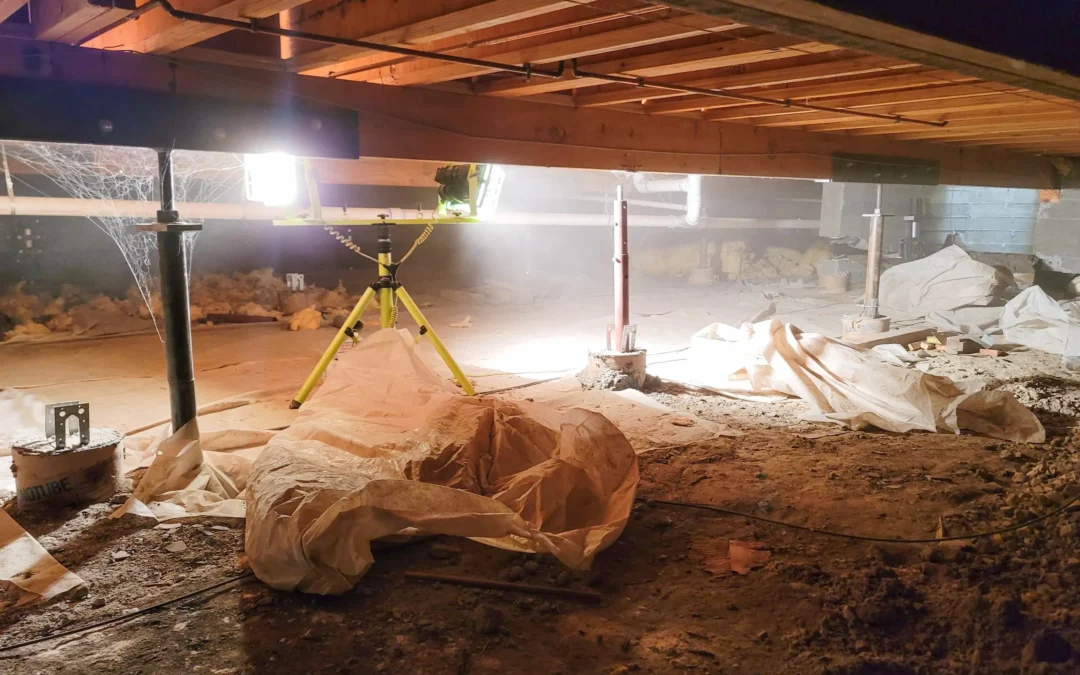
Damp conditions beneath a house can drive pest activity. Crawl space moisture creates an ideal environment where insects and rodents can thrive, nest, and eventually spread into living areas. Keeping this space dry is essential for preventing infestations and protecting the home’s structure.
Where Crawl Space Moisture Comes From
Understanding how moisture enters a crawl space helps identify risks. Common sources include:
- Ground moisture seeping up from the soil
- Poor drainage around the home’s foundation
- Plumbing leaks or broken pipes
- High seasonal humidity
- Limited airflow or ventilation beneath the home
Enclosed, shaded crawl spaces slow moisture evaporation. These conditions keep soil and wood damp, creating a stable environment that attracts pests. Over time, this hidden area becomes a haven where insects and rodents survive and reproduce year-round.
Why Moist Conditions Attract Pests
Moisture attracts pests that depend on damp environments. Termites are drawn to weakened, damp wood. Ants, cockroaches, and silverfish thrive in humid areas where mold and organic debris develop. Rodents are also more likely to inhabit crawl spaces with abundant moisture and insect activity.
Excess moisture creates a hospitable environment for pests. Once established, they can migrate into living areas through wall voids, pipes, and structural gaps. This is why addressing this issue is often a crucial first step in pest prevention.
How Moisture Sustains Pest Problems
Crawl space moisture not only attracts pests but also helps them persist. Damp conditions provide breeding sites and hiding spots, making infestations harder to eliminate. Even after treatment, pests may return if moisture continues to support their survival.
Addressing the source of moisture reduces opportunities for food and shelter. This makes the crawl space less inviting to pests and improves pest control effectiveness.
Signs That Moisture May Be a Problem
Early detection of excess moisture can prevent long-term issues. Indicators include:
- Musty odors near floors or vents
- Mold or mildew on wood or insulation
- Frequent indoor insect sightings
- Condensation on pipes or HVAC components
Recognizing these signs early lets homeowners address crawl space moisture before it leads to significant pest problems.
Manage Crawl Space Moisture Today
Crawl space moisture creates conditions that attract pests and make infestations harder to control. Addressing the source of dampness is crucial for maintaining your home’s safety and structural integrity.
Since 2011, Bennett Termite & Pest Solutions has provided trusted pest control and crawl space moisture solutions across Delaware, Maryland, and Virginia. Contact us today to schedule an inspection and safeguard your home from pests and moisture-related problems.